The best way to install a home theater system is to do it as the house is being built. We won’t have to cut into any walls, drill holes into floorboards, or work our way around furniture. We love working with homebuilders to create exceptional systems, but don’t let that fool you: our relationship is still with our customer, the end user.
Starting from scratch does require a level of sensitivity with homebuilders. We don’t want to get in the way of contractors, or have our work delay scheduling. Still, home electronics – in many ways – are just as important to a new home as is the plumbing, wiring and structure. Our work goes beyond entertainment, too: It’s lighting, security systems, and heating and air conditioning controls – and integrating it all for ease of use.
Working with builders makes our job easier, too. If we can see where recessed lighting will be, for example, we can build our speakers around it. It gives us flexibility.
Our industry software is called D-Tools, and allows us to create accurate A/V system designs and manage our projects. We can import an architect’s CAD drawings and design your electronics architecture around the home design plans.
D-Tools is System Integration Software for the AV, Energy, IT, and Security Industries
Building a new home? Think beyond the walls and roof. Give us a call and let’s go over your design plans and optimize your home electronics systems. After your custom home is built, you’ll be glad you did.
P.S. While we love custom-built home construction, we have a passion for home theater retrofits. A bit more challenging, yes, but, well, we’re just that kind of design team that loves that kind of project. So don’t hestitate to call us if you didn’t get all you wanted in your home when you originally built it or when you bought it from the previous homeowner. We’re just a phone call away at 804.741.5816.
CEDIA – Sounds like a type of bug, but isn’t
By · CommentsThere’s a term for the people in our industry that you should probably keep away from when it comes to home theater systems: Trunk slammers.
These are the guys who mainly work out of their car, just doing what he needs to do to get by. Home installs are probably a side job for him. You’re not really dealing with a company, per se.
With us, you are. And we can prove it, with the little icon you see in this post. We’re CEDIA certified. So what does being CEDIA certified mean to you? Seeing the CEDIA stamp means you can trust that you’re dealing with “proven experts who are committed to a higher standard of education,” according to the organization. You’ll not only get the finest in custom electronics design and installation, but you’ll also have peace of mind.
Our experience with CEDIA – which stands for Custom Electronic Design & Installation Association – is that this is a group that is extremely supportive of our industry and is serious about the work that comes out of it. Sound + Image Design went through rigorous testing and training because we believe in CEDIA certification so much.
But let’s be serious for a moment: This is a fun job. And we meet tons of fun people and get to play with all kinds of fun toys. CEDIA’s annual Expo (see pics and a review here) gives us an idea of the latest and greatest (and the “blah” products) coming on the market.
We’re confident that we’re the company that will meet your unique needs. Talk to others who have been through the process. Read our testimonials. If you’d like to talk to or see projects we’ve done, let us know.
We think you’ll realize: When it comes to home theater, audio and video installations in Central Virginia, we set the bar.
How can CEDIA help you as a homeowner?
Adding custom home theater, multi-room audio, or automation is a wonderful investment that will add to the enjoyment and value of your dream home. But an investment of this size shouldn’t be trusted to just any company. That’s why you should consider a CEDIA certified member.
CEDIA certified companies have met vigorous industry standards and have been formally educated and specially trained. These are critical steps to ensure that your investment in your home is not wasted. In addition, CEDIA member companies have agreed to the CEDIA Code of Ethics, perhaps the most highly regarded standard in the Electronic Lifestyles® industry.
For a free home theater consultation in the Greater Richmond or surrounding areas, simply call our office at 804.741.5816.
Knowing your home media lifestyle helps us to design a system just for you. And Control4 makes it easy for everyone in the family to operate.
Let’s talk about client process. You’ve obviously heard “the customer is always right.” The only way to make sure that happens is to get to know you and your needs. If you’re in the market for a home audio and/or video system – and the service that goes along with it – here’s what you can expect from Sound and Image Design.
When and why do our clients come to us? Two reasons mainly:
- Many times, they’re building a new home, putting on an addition, or landscaping their property and want to install a new home theater system.
- Other times, the house, room or yard is already there, and the client wants a quality entertainment system.
We work with builders, architects and interior designers, but ultimately, our duty is to the client – the person, couple, or family that is going to be using the products we install and the services that we offer.
But before there can be entertainment, there must be ascertainment. We have to get an idea of your lifestyle goals and needs.
It begins with the Sound and Image Design Meet & Greet (aka the Discovery Phase).
This is where you get to know us, and perhaps more importantly, we get to know you. What are your priorities? What’s your lifestyle? Are you more into music or movies? Is this system going into one room, two, or all of them? How many TVs will you have? Do you want electronics indoors and out, or just one or the other?
We’ll look around the blueprints or your home – take a site survey, as it were – and write down notes of the challenges or obstacles we’ll face while installing. Retrofits are a bit more difficult than installing in a home under construction, but we love doing both.
And here’s a little fun fact: You won’t see wiring on any system we install. It’s all concealed in your walls or cabinets.
I’ll be honest: Most clients don’t have an idea of their budget, and for most, their needs are more expensive than what they were expecting. Not because of our cost, but because of the equipment involved. It’s not cheap stuff; but it’s high-quality. We know the equipment we’re installing or recommending – we’ve tested it and use it ourselves. And, of course, we’ll discuss options with you.
Bottom line: We won’t put a box into your house that we don’t believe to be the best in class of its kind.
For a free consultation, give us a ring: (804) 741-5816 to make an appointment at a time that is convenient for you.
The Battle of the Sexes Comes to Home Theater Design
By · Comments
You’d think men, with their love of big screen TVs for football watching, would be the one to be in the market for a high-tech home theater system, wouldn’t you?
We’ll, you’d be surprised.
In my 20 or so years of installing home theater systems, I’ve discovered primarily two types of customers that are split across the sexes: The man of the house, typically a husband, who is big into the technology and wants an awesome home theater installed for his castle. That’s the main type of customer you probably think of, too.
But then you have the woman of the house. She’s typically tired of having 30 remotes on the coffee table. She’s tired of wires, of seeing different black boxes that do different things and DVD or CD cases cluttering up the TV stand or living room.
Typically, he wants performance and she wants aesthetics.
And men think they can do it all, too. From one survey:
“When it comes to installing a home theater, nearly half of men say they are ‘very confident’ they can do it themselves while just three in 10 women say the same. In fact, the majority of women surveyed (51%) say they are ‘not at all confident’ about installing a home theater themselves.”
Typical of us guys, right?
When it comes to performance and looks, at Sound and Image Design, we make sure to meet the needs of everyone in the house. We create home theater systems that work reliably and sound great, but also look good within the home’s decor.
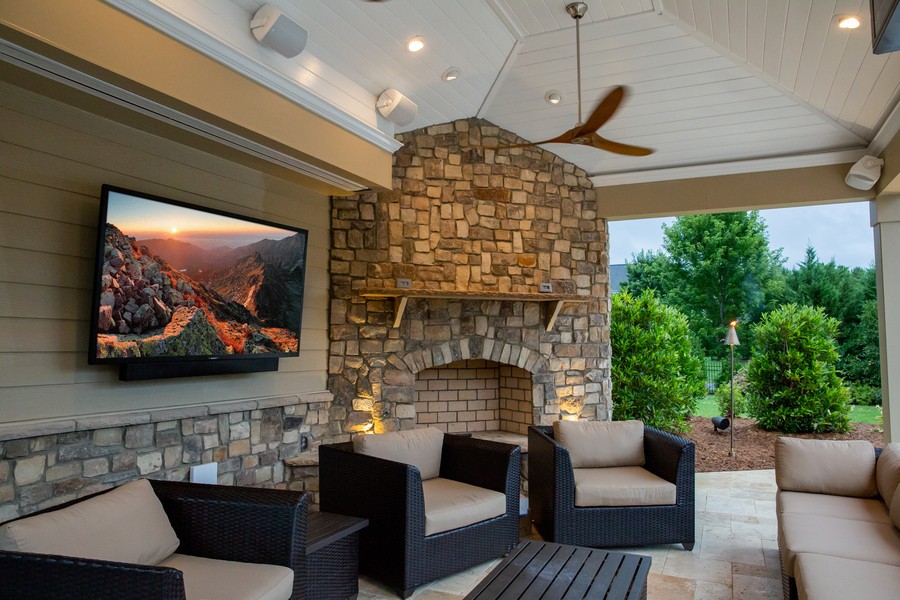
You won’t see the boxes if you don’t want to. We hide speakers in the walls of your entertainment room – literally, invisible speakers. You will not see anything. We whittle all your remotes down into a single easy-to-use device, from Control4 (now compatible with the iPad).
So, no matter who is in the household and no matter what the technology or design concerns are, we have a solution for you. Give us a ring at 804.741.5816 to find out more.
HDBaseT Makes Connecting Your Home PC and TV Easy
By · CommentsYou probably don’t get too excited over cables for home theater and entertainment systems, but we certainly do. In fact, the latest development in this segment of our industry (that being home electronics) has us pretty pumped up.
You may have heard of HDMI cables, which essentially get rid of the standard red, blue, yellow, green and other colored cables that have long been used for connecting stereos, set-top boxes, TVs, video game systems and the like. HDMI cables combined all those cords into one, and were optimized for high-definition devices and TVs.
Enter HDBaseT.
Now, let’s cut past the jargon. This new home theater technology uses the same Ethernet cord that you plug from your computer into an Internet jack. It looks like a phone cord, but is a little thicker. HDBaseT is a standard that will be built into many new TVs, stereo systems, high-definition Blu-ray players, and more consumer electronic devices. Provided the device is built with the HDBaseT standard, you’ll be able to connect everything with a typical Ethernet cord (expect really pricey ones to come on the market that’ll try to take your wallet for a spin).
At Sound + Image Design, it’s our belief that HDBaseT will usher in a new era of Internet-connected devices that will plug straight into your high-definition TV and make browsing the Web on your tube much easier (see Google TV). And because the wires can extend up to 328 feet, you can connect a PC in your home office directly into your TV in the living room (Our company can hide that cable in your walls, too).
As the NewTeeVee blog puts it: “There’s really no more excuses for not connecting your PC to your TV, even if the two devices are located in different rooms of your house.”
Plus, HDBaseT could eventually declutter the bird’s nest of cables you may have underneath your home theater system, streamlining them all into one. The standard is supported by LG, Samsung, Sony Pictures Entertainment and Valens Semiconductor. You should start seeing devices from these consumer electronics makers (and certainly others) later this year before being adopted heavily in 2011.
If you’d like more information on HDBaseT or want to develop a plan for integrating it into your Richmond home, call our Richmond Home Theater Showroom today 804.741.5816.
HGTV Dream Home 2010: Home Theater Tour
By · CommentsSuper fan Gail Fenton gives a tour of the 2010 HGTV Dream Home’s home theater. This video is part of HGTV Dream Home 2010 show hosted by Gail Fenton.
Home Theater Question: Is there an ideal distance (or maximum/minimum distance) that a person should sit from their television for optimal viewing? Also, is there an ideal height to hang a TV if you’re putting it up on a wall? What are the guidelines you give customers?
The ideal viewing distance depends on 2 main factors; screen size and resolution of the TV or display.
Most displays manufactured today have a resolution of 1080P, so we’ll use this as our reference. Although there are varying opinions and methods to calculate this, two of the most common viewing distance guidelines are 1.5 – 2.5 times the diagonal measurement of the display or 3-5 times the screen height (preferred). If you sit any closer than 3 times the height of the screen you will start to notice the display’s pixel structure. As viewing distance increases beyond 5 times the screen’s height, you will lose the benefit of the display’s 1080P resolution.
In other words, you’ll miss some of the detail of high definition content. The higher a display’s resolution is, the closer you may sit to it. As resolution decreases, you’ll want to sit farther away to avoid seeing any imperfections.
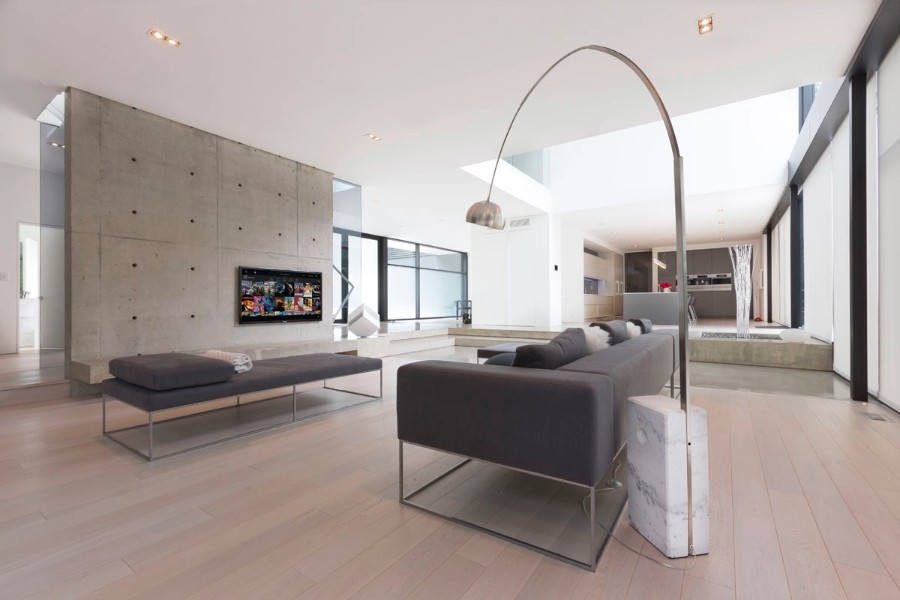
There are exceptions to every rule, but the general guideline is to mount your TV at a height that allows viewing to be natural and comfortable. It should be mounted allowing you to view the screen head on with the center of the screen being at eye level. This is generally at a height of around 48 inches for the average person. You don’t want it mounted at a height that forces you to tilt your head back. If circumstances require that the TV be mounted higher, make sure that the bottom of the screen is no higher than eye level.
Sound and Image Design helps homeowners simplify and enjoy their lives with easy-to-use home technology systems such as home theaters, whole house music systems, and home automation. For more information or to receive a free estimate, please call your Richmond home theater experts at 804.741.5816.
We hear music differently as we age.
By · CommentsAs we age, even the little hairs in our inner ear lose some of their function which means we begin to lose our hearing in the very high frequency ranges and even some of the low frequency ranges.
The average range of hearing for children is from a low of 20 Hz to a high of 20 kHz. By the time a person hits the age of 20, years of attending loud concerts may already have killed off the ‘high tones’. Studies show that the high range for an average young adult is about 16,000 Hertz (16 kHz). In another 10 years, a 30-year-old is often down to a mere 12,000 Hertz (12 kHz). Such a person would simply not be able to detect the presence of, say, a 14 kHz squeal in an audio track.
Loss of hearing as a result of the aging process is called presbycusis. The process involves degeneration of the inner ear (cochlea). Presbycusis can also involve other parts of the auditory system. The hearing loss is progressive in nature with the high frequencies affected first. While the process begins after age 20, it is typically at ages 55 to 65 that the high frequencies in the speech range begin to be affected.
So why is this so important? Well, knowing how people hear high and low frequencies in music and knowing what type of music the family listens to most – rock-n-roll versus classical, for example — is critical to designing a home media room for that family to truly enjoy.
This is just one of the many hundreds of considerations that Sound + Image Design takes into account when working with their Clients to tailor a custom-built home media room for their Clients’ listening pleasure.
If you’re ready to take the next step in building your home theater room or perhaps your looking to build a whole house audio and video integration system, simply call our Richmond showroom at 804.741.5816.
You may have already seen consumer products with designated as ZigBee Smart Energy Certified Products. According to ZigBee, “these products represent solutions across the entire efficiency ecosystem energy services portals, meters, displays, thermostats and load controllers. Each product may wear the ZigBee Certified logo and the green ZigBee Smart Energy icon so that they may be easily identified in the marketplace.”
What may be more relevant to consumers are the products designated as ZigBee Home Automation Certified Products.Per Zigbee’s website, “Only ZigBee offers an established, competitive marketplace providing the core technology for simplifying common household tasks. ZigBee Home Automation is the affordable and easy way to control and monitor energy use, while adding safety, security. With ZigBee Home Automation products, your home will be more convenient and smart.”
Products such as the Control4 Home Controller HC-300, often used as the central building block for a smart home, making it easier to add intelligent control to a home at an affordable price. An HC-300 replaces on average more than four traditional remote controls and delivers easy navigation and use through a single universal Control4 system remote.
Sound and Image Design is uniquely qualified to assist you with all your home automation needs. Just call ourRichmond areashowroom at 804.741.5816. Home theater and home automation made simple.